April 13, 2026 • Callum Voss • 9 min reading time • Specs verified June 5, 2026
The Complete Ultrasonic Cleaning Setup for Watch Repair: Machine, Basket, and Solution Choices That Matter
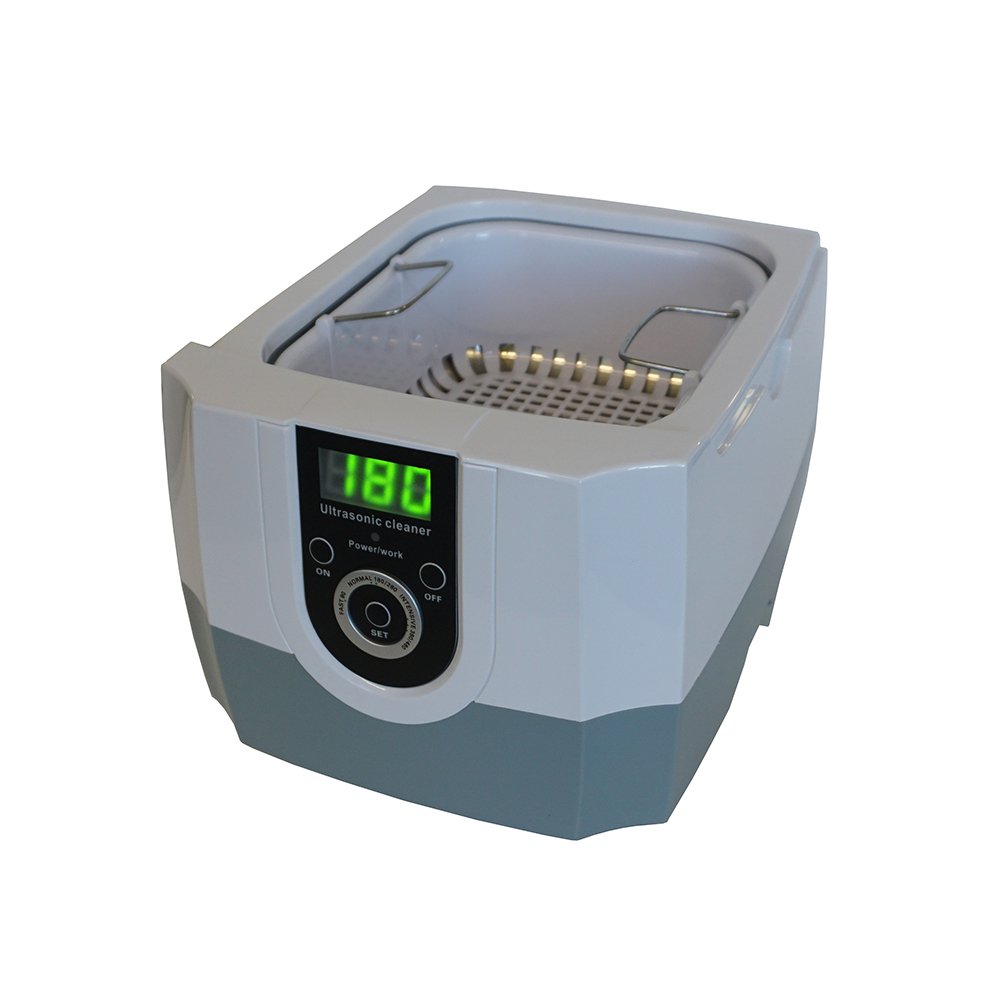
If you’ve ever squinted at a gummy mainspring or a pivot clogged with years of dried lubricant, you already understand why watchmakers reach for ultrasonic cleaners. An ultrasonic cleaner is a tank of liquid that vibrates at a frequency far above what human ears can detect — typically 28,000 to 80,000 cycles per second, written as 28 kHz to 80 kHz — creating millions of microscopic bubbles that implode against surfaces and scrub away contamination at a microscopic level. The process is called cavitation, and when it’s tuned correctly for the job, it removes oil, oxide, and debris from tiny watch components without the mechanical risk of brushing. This guide walks through every decision in building a capable watch-repair ultrasonic setup: which machine to buy at which price point, how to select and configure your basket, and which cleaning solutions are safe for the mixed metals and synthetic coatings you’ll encounter on real movements.
Frequency First: Why 40 kHz Is the Watchmaker’s Default (and When to Go Higher)
Frequency is the most consequential decision you’ll make, and it’s also the one spec that’s easiest to get wrong by defaulting to whatever’s cheapest.
Here’s the underlying physics in plain terms: lower frequencies (28 kHz) produce larger, more energetic cavitation bubbles. That’s useful for removing heavy industrial contamination from hard steel. Higher frequencies (80 kHz) produce smaller, gentler bubbles with more uniform coverage — better for delicate substrates and tight geometries. Watch movement parts live firmly in the 40–80 kHz sweet spot.
40 kHz is the industry consensus for general watch movement cleaning. Cole-Parmer’s ultrasonic frequency and cavitation application reference notes that 40 kHz provides effective cleaning action on small, precision parts without the aggressive energy transfer that risks damage to polished surfaces or thin platings. This is confirmed broadly across watchmaker community threads on WatchUSeek, where the consistent recommendation for entry and mid-tier setups is a 40 kHz unit.
80 kHz becomes worth considering when you’re regularly working with:
- Highly polished or mirror-finished components (dial feet, case parts post-finishing)
- Very thin gilt or rhodium plating on older Swiss movements
- Delicate pallet fork jewels or shock settings where you want maximum gentleness
The tradeoff: 80 kHz machines cost significantly more, and cleaning cycle times tend to run longer because the smaller bubbles deliver less energy per unit time. Elma’s xtra ST series, which offers switchable or dedicated 80 kHz operation, is one of the few lines that makes this configuration genuinely accessible for a bench watchmaker rather than requiring a full industrial setup.
28 kHz has almost no place in a watch repair workflow. It’s appropriate for degreasing bulk machined parts or removing scale from castings — not for movement components.
The Frequency Decision Rule
- Working on modern movements, generic service cleaning, mixed case/bracelet work → 40 kHz
- Specializing in vintage Swiss, high-finish components, or gilt movements → 40 kHz primary + 80 kHz secondary, or a dual-frequency unit
- 28 kHz appears in your shortlist → remove it and start over
Tank Sizing: The Math Most Buyers Get Wrong
The single most common buying mistake in this category is choosing tank volume based on the largest part you plan to clean. That’s the wrong variable. The correct variable is usable interior volume after you account for basket clearance and minimum fluid level.
By the numbers:
- Usable basket area is typically 60–70% of rated tank interior dimensions
- Minimum fluid level above the basket bottom: 1 inch (25 mm) recommended
- Parts should not contact tank walls or bottom — add ≥ 10 mm clearance on all sides
- A movement basket holding a 40 mm movement typically requires a tank with at least a 150 mm × 100 mm interior footprint
For a dedicated watch bench, a 0.75L to 2L tank hits the practical sweet spot. You get enough fluid volume to maintain stable temperature, a footprint that fits a watchmaker’s bench, and enough interior room for a proper stainless mesh basket insert.
Going smaller — some sub-0.5L units are marketed for jewelry — means you’re running at the edge of thermal stability and basket clearance simultaneously. Going larger (3L+) isn’t harmful, but you’re heating and maintaining more solution than you’ll cycle through efficiently at bench scale, which increases solution consumption cost and contamination risk over time.
Crest Ultrasonics’ CP series application notes for watch and jewelry cleaning specifically call out that over-sizing the tank relative to part load reduces cavitation intensity at the part surface because energy is distributed across a larger fluid volume. Matching tank size to actual workflow — not aspirational workflow — keeps cleaning intensity where you need it.
Baskets and Inserts: The Setup Detail That Changes Results
The machine is the headline purchase, but the basket configuration is where day-to-day cleaning quality is actually determined. Most machines ship with a generic stainless mesh basket that sits on the tank bottom or just above it. For watch work, that’s a starting point, not a finished setup.
What you actually need:
A suspended mesh basket, not a resting one. Parts resting directly on the tank bottom sit in a dead zone where cavitation energy is lowest (the ultrasonic transducers are mounted to the exterior of the tank bottom, and the area immediately adjacent to them can be a node rather than an antinode of vibration). Baskets that hang from the tank rim or sit on raised feet keep parts in the active cavitation zone — typically 20–50 mm above the tank floor.
Individual part compartments or a pegboard-style organizer. Watch parts — mainspring, bridges, wheels, cannon pinion — should not contact each other during cleaning. Friction between parts during cavitation can cause micro-scratches. L&R Manufacturing’s watch cleaning solution compatibility guides explicitly note part separation as a handling requirement alongside solution selection.
Ultrasonic-compatible plastic or stainless inserts for jewels and shock settings. For extremely delicate parts, operators in long-run watchmaker community discussions on WatchUSeek consistently note using small plastic compartments (polypropylene or HDPE) nested inside the main basket to dampen direct cavitation exposure while still allowing solution circulation. This is especially common for pallet assemblies in vintage ébauches.
Lid discipline. Always run cycles with the lid closed. Aerosol contamination from cavitation — particularly with solvent-based solutions — is a real exposure concern, and an open tank loses heat rapidly, destabilizing cleaning temperature.
Solution Chemistry: What’s Safe, What’s Not, and What the Labels Don’t Tell You
This is where watch repair ultrasonic cleaning diverges sharply from jewelry or firearms cleaning, because watch movements contain a wider range of materials in closer proximity than almost any other cleaning application: steel, brass, copper alloys, synthetic rubies, shellac-set jewels (in vintage pieces), PTFE-coated parts in some modern movements, and gilt or rhodium surface treatments.
The baseline safe choices:
Purpose-formulated watch cleaning solutions from L&R, Elma, or similar watchmaking-specific suppliers are the low-risk starting point. These are pH-buffered aqueous solutions designed for mixed-metal watch parts. L&R’s formulations have long been standard reference points in the watchmaking trade; their compatibility guides document which solution variants are appropriate for brass versus steel versus jewel-set components.
Branson’s BRANSONIC M series documentation recommends their branded ultrasonic cleaning solutions for precision parts but also notes compatibility with third-party formulations provided pH stays in the 7–10 range for ferrous and brass components. That’s a useful practical boundary.
What to avoid:
- Ammonia-based solutions (common in some jewelry formulas): safe for high-karat gold but damaging to brass alloys and copper over repeated exposure. Brass movement components and plates are at risk.
- Strong alkaline solutions (pH > 11): can attack gilt surfaces and accelerate oxidation on steel parts between cycles if rinsing isn’t immediate.
- Solvent-based solutions without confirming compatibility with any plastic components in your basket or — critically — in the movement itself. Some modern movements use plastic keyless work components or lubricant-retaining bushings.
- Tap water as the primary solvent: mineral deposits from hard water will redeposit on cleaned parts as the solution cools. Deionized or distilled water as the solution base is standard practice in professional settings.
The rinse cycle is not optional. Two-stage operation — cleaning tank followed by a rinse tank of clean deionized water — removes solution residue that would otherwise dry onto parts and require re-cleaning. Many practitioners use a three-stage approach: cleaning solution → rinse → final rinse with fresh DI water or rinse aid solution. The Elma xtra ST line is designed around this multi-tank workflow, with matched tank sizes to make staging practical.
Machine Recommendations by Tier
Entry bench (~$150–$400): The iSonic P4810 and comparable 40 kHz units with temperature control and a mechanical timer represent the realistic entry point for serious bench use. Published specs on these units put tank volume around 0.6–0.8L — right-sized for movement parts — with temperature range to 65°C and basic timer control. Operators report consistent results for modern movements with appropriate solution.
Mid-tier bench ($400–$800): Branson BRANSONIC M series units in the 0.5–1.9L range add sweep frequency modulation (slight variation around the center frequency to prevent standing wave dead zones) and more precise temperature control. Branson’s spec sheets rate sweep as a meaningful performance improvement for small, precision parts — it’s one of the features worth paying for at this level, not just a marketing line.
Professional and prosumer ($800–$2,000+): Elma xtra ST units and Crest CP series in the 1–3L class offer the multi-tank staging support, 80 kHz options, degassing modes, and build quality that make sense if ultrasonic cleaning is a primary workflow rather than an occasional step. Published spec comparisons put Elma’s frequency accuracy and temperature uniformity at the top of this class for watch and precision instrument applications. Crest’s CP series is the North American professional benchmark, with well-documented application support for watch and jewelry trade use.
The Decision Frame
If you’re setting up a general watch service bench for the first time: buy a 40 kHz unit in the $150–$400 range with temperature control, add a proper suspended stainless basket with part separators, and use a purpose-formulated watch cleaning solution from L&R or Elma. That setup will handle the vast majority of modern movements correctly.
If you’re running a volume bench, specializing in vintage or high-finish pieces, or positioning your shop around quality of finish: invest in a Branson or Crest mid-tier unit with sweep, budget for a second rinse tank, and build a three-stage workflow. The solution chemistry and staging discipline will matter as much as the machine.
If you’re still deciding whether to add ultrasonic cleaning to your workflow at all: the honest answer from aggregated watchmaker community experience is that the machine pays for itself in time saved on cleaning and re-lubrication — but only if the frequency, basket, and solution are matched correctly. A mismatched setup doesn’t just clean poorly; it can introduce contamination or damage that costs more than manual cleaning would have.
Get the frequency right. Size the tank honestly. Separate your parts. Use solution that was formulated for what you’re cleaning. Everything else is tuning.