May 4, 2026 • Callum Voss • 9 min reading time • Specs verified June 5, 2026
Ultrasonic Transducer Basics: When to Replace, What to Buy, and What the Specs Actually Mean
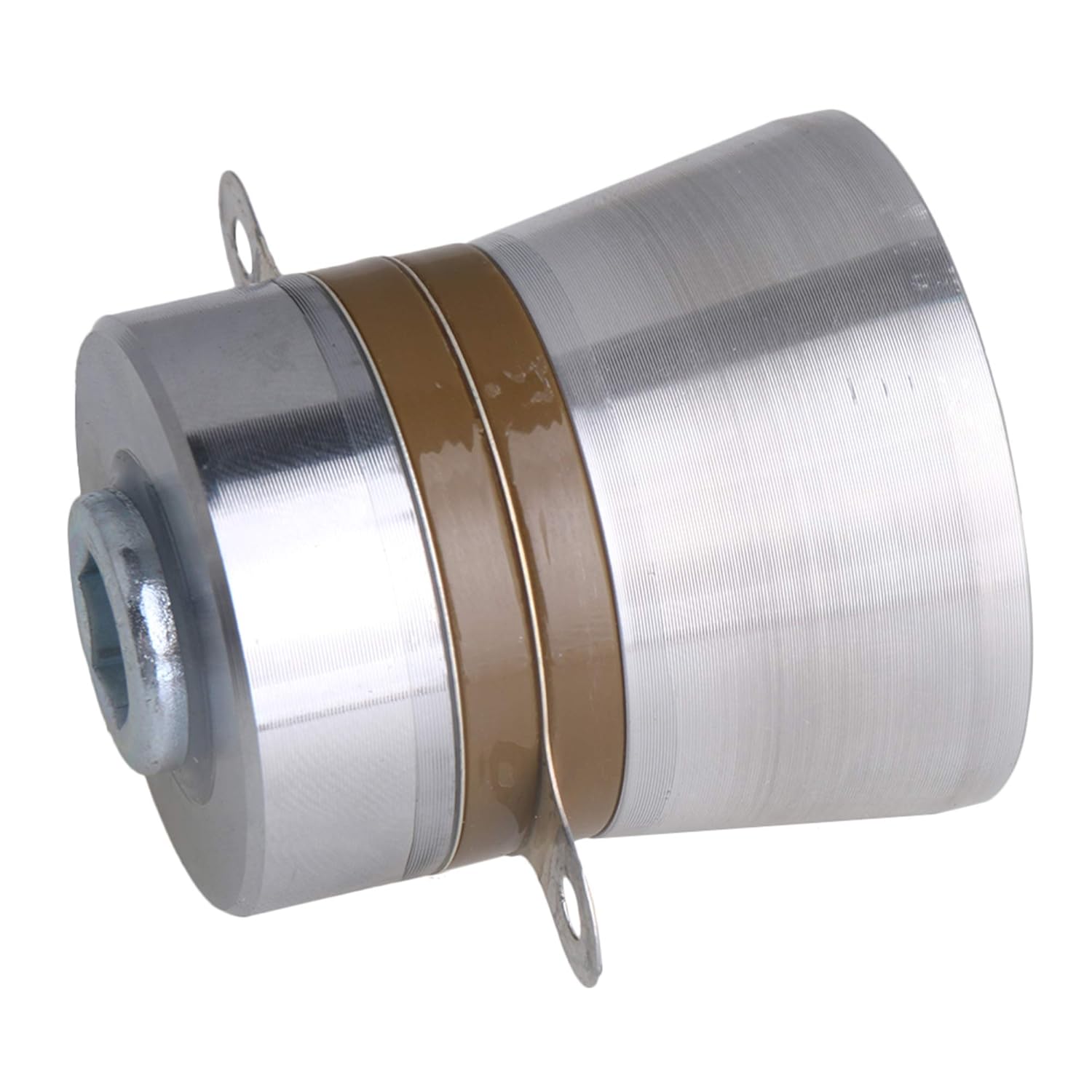
Every ultrasonic cleaner — whether a $45 jewelry tank from a big-box store or a $2,000 Branson BRANSONIC sitting on a jeweler’s bench — does its cleaning work through one component: the transducer. A transducer (from the Latin transducere, to lead across) is a device that converts one form of energy into another. In this case, it converts electrical energy from the generator into mechanical vibration. Those vibrations travel through the liquid in the tank and create millions of microscopic bubbles that implode with enough force to scrub contaminants off parts — a process called cavitation. No transducer, no cavitation. Weak transducer, weak cleaning. This guide explains how transducers work at a spec level, how to recognize when one is failing, and what to actually look for when you need a replacement — whether you’re sourcing a single disc for a DIY repair or specifying a new multi-transducer unit for a production environment.
| EDITOR'S PICKAc 110v 100W Power Driver Board… | Mid-tier[YaeCCC 60W 40KHz Ultrasonic Cle](https://www.amazon.com/dp/B078MKN29W?tag=greenflower20-20)… | Budget pickHigh Conversion Efficiency 60W… | |
|---|---|---|---|
| Power | 100W | 60W | 60W |
| Frequency | 28KHz | 40KHz | 40KHz |
| Voltage | 110V | 110V | — |
| Board included | ✓ | ✓ | ✗ |
| Piezo type | — | — | Piezoelectric |
| Price | $68.99 | $49.99 | $28.10 |
| See on Amazon → | See on Amazon → | See on Amazon → |
How Transducers Actually Work — and Why They Degrade
Most commercial ultrasonic cleaners use piezoelectric transducers — typically disc or sandwich-style assemblies made from a piezoelectric ceramic (usually lead zirconate titanate, or PZT) bonded to a metal mass and a radiating plate. When the generator sends alternating voltage across the ceramic, it physically expands and contracts at the drive frequency — typically 28 kHz, 40 kHz, or 80 kHz. That mechanical motion is coupled to the tank wall or a dedicated radiation plate, which transmits vibration into the liquid.
The competing older technology, magnetostrictive transducers, uses a nickel or nickel-alloy stack that changes shape under a magnetic field. Magnetostrictive units run cooler, tolerate higher power densities, and were common in industrial and military applications. Per Cole-Parmer’s Ultrasonic Cleaner Selection Guide, piezoelectric designs have largely displaced magnetostrictive in the sub-$5,000 commercial market due to higher energy efficiency, lower cost, and easier drive electronics — though magnetostrictive remains relevant in some high-power industrial niches.
Why do piezoelectric transducers fail?
-
Delamination. The ceramic disc is bonded to the metal mass and radiating plate with an adhesive (often epoxy or a brazed joint). Thermal cycling — the tank heats and cools hundreds of times — stresses that bond. Delamination decouples the ceramic from the radiating surface, dramatically reducing energy transfer. This is the most common failure mode in systems that are heated frequently.
-
Ceramic cracking. PZT ceramics are brittle. Physical shock (dropping a heavy part directly onto the tank floor), running the tank dry, or prolonged operation above rated temperature can crack the disc. A cracked transducer typically fails suddenly rather than gradually.
-
Depolarization. The piezoelectric effect depends on a permanent polarization “baked into” the ceramic during manufacture. Excessive heat — generally above 150–200°C, depending on the ceramic grade — can depolarize the material irreversibly. In normal cleaning use this rarely occurs, but it can happen if a transducer is driven hard while partially delaminated (the energy has nowhere to go, so it becomes heat).
-
Bond wire or electrode failure. The electrical connections to the ceramic face can corrode or fatigue over time, especially in humid or chemically aggressive environments.
Elma Ultrasonic’s xtra ST series service notes flag thermal stress and dry running as the two most preventable causes of premature transducer failure. Both are operator errors, not design flaws.
Diagnosing a Failing Transducer
The challenge with transducer degradation is that it’s rarely binary. A delaminating transducer often still appears to work — the unit powers on, the generator runs, you might hear some noise — but cavitation intensity is down 30–50% before you notice cleaning results slipping.
The foil test is the standard field diagnostic. Suspend a piece of standard aluminum foil in the tank, filled with plain water, and run the unit at normal power for 30–60 seconds. A healthy transducer will pit and perforate the foil uniformly within that window. Sparse pitting, uneven patterns, or foil that survives largely intact all point to reduced cavitation. Per Branson’s BRANSONIC series operator manuals, this test is specifically recommended as a periodic QC check for cleaning verification — not just fault diagnosis.
Frequency drift is a subtler sign. Most generator circuits include a phase-locked loop (PLL) or automatic frequency control (AFC) that compensates for minor changes in transducer resonant frequency. When a transducer’s resonant characteristics shift significantly due to delamination or cracking, the generator may still lock, but at reduced efficiency. Some professional-tier generators (Branson, Elma, Crest CP series) expose a power or current draw reading; a unit drawing noticeably less current than rated at the same power setting often indicates the generator is struggling to load properly into a degraded transducer stack.
By the numbers — degradation signals to track:
| Indicator | Healthy | Investigate |
|---|---|---|
| Foil test (30 sec) | Uniform pitting, visible holes | Sparse pitting, large intact areas |
| Generator current draw | Within 10% of rated | >20% below rated at full power |
| Tank noise character | Consistent hiss/roar | Intermittent, buzzy, or weak |
| Cleaning cycle time | Baseline established at commissioning | Noticeably longer for same soil load |
Decoding the Specs — What Actually Matters
When you’re sourcing a replacement transducer or evaluating a new unit, the spec sheet will surface four numbers most often. Here’s what they mean operationally.
Frequency (kHz). This is the resonant operating frequency of the transducer. It directly determines bubble size and energy per implosion. Lower frequencies (28 kHz) produce larger cavitation bubbles with higher collapse energy — good for heavy soils, machined metal parts, and firearms work. Higher frequencies (80 kHz) produce smaller, gentler bubbles — appropriate for delicate surfaces, soft metals, coated components, and fine jewelry. Per IPC-CH-65B Guidelines for Cleaning of Printed Circuit Board Assemblies, 40 kHz is the most common PCB cleaning frequency, balancing flux removal efficacy against substrate and component risk. A replacement transducer must match the generator’s drive frequency exactly — a 28 kHz generator cannot drive a 40 kHz transducer effectively.
Power rating (watts). Transducer wattage is the continuous power the ceramic assembly is rated to handle, not the peak power your generator produces. The relevant figure for cleaning performance is watts per liter of tank volume — Crest Ultrasonics’ technical reference cites 10–30 W/L as the normal working range for industrial cleaning, with precision cleaning applications sometimes running lower to avoid surface damage. A 100W transducer in a 2L tank (50 W/L) is working hard and generating significant heat; the same transducer in a 10L tank is barely cavitating the far corners. Tank-to-transducer power matching matters more than raw wattage.
Impedance (ohms). This is the electrical load the transducer presents to the generator at resonance. Most commercial piezoelectric transducers are designed to match generator output impedance — typically in the 50–100Ω range at resonance, though this varies by manufacturer. Mismatched impedance reduces power transfer efficiency and can stress the generator’s output stage. Replacement transducers should match the original spec. Cole-Parmer’s selection guide notes that impedance matching is especially critical when retrofitting transducers from third-party sources into OEM generators.
Capacitance (nanofarads, nF). The ceramic disc has an inherent static capacitance, typically listed in the transducer spec. This doesn’t affect cleaning performance directly, but it tells you about the quality and thickness of the ceramic — and it’s the parameter used to verify a transducer’s condition with a simple LCR meter. A freshly depolarized or cracked ceramic will show significantly lower capacitance than the rated spec. Grainger’s ultrasonic cleaner product listings often include capacitance figures for their replacement transducer stock; it’s worth recording the baseline reading of a new transducer for future comparison.
Repair vs. Replace: The Decision Frame
If you’re sitting with a degraded transducer, the math is fairly clean once you know a few things.
Repair (rebonding or re-cementing) is viable when the ceramic itself is intact and the failure is delamination. Ultrasonic transducer rebonding is a legitimate repair technique — industrial service shops use specialized structural adhesives (often two-part epoxy formulations rated for thermal cycling) to reattach the ceramic to the mass block. Success depends on the bonding surfaces being clean and undamaged. The limitation: this requires removing the transducer from the tank (typically unbolting or unsoldering), cleaning both mating surfaces, applying adhesive under compression until cured, and then re-tensioning the assembly if it’s a bolted sandwich design. For a shop that does this regularly, it’s a 30-minute job. For someone doing it for the first time on a Crest CP or Elma xtra unit, Elma’s service notes recommend factory service for bonded-plate designs specifically because improper re-bonding can introduce asymmetric coupling that’s worse than the delamination it was meant to fix.
Replacement is the clear call when:
- The ceramic is visibly cracked
- Capacitance measurement reads more than 20% below rated spec
- The unit is out of warranty and the replacement transducer costs less than 40% of the unit’s current value
- You’re running a production environment where downtime cost exceeds parts cost
Keep and run (degraded) makes temporary sense only if cleaning performance is still within spec for your application and you’re managing the situation consciously — not just ignoring it.
If X, then Y — the decision rules:
- If foil test fails but capacitance reads nominal → suspect delamination; rebonding is worth attempting before buying new
- If capacitance is >20% low → ceramic is damaged or depolarized; replace the transducer
- If the unit is under 2 years old and fails → invoke warranty before touching anything; Branson and Crest both carry 1–2 year transducer warranties on commercial units
- If the unit is >7 years old and a transducer fails → price a new unit in parallel; a second transducer failure in an aging generator is common, and the generator’s capacitor bank may also be approaching end of life
- If you’re sourcing a replacement transducer from a third-party supplier → match frequency exactly, verify impedance spec against your generator’s documentation, and measure baseline capacitance on arrival before installation
One honest caveat: transducer sourcing from gray-market suppliers — particularly for Branson and Crest units — surfaces frequently in maintenance discussions across professional forums and industry service networks. Published-spec compliance is not guaranteed from unlisted suppliers, and a transducer that’s nominally the right frequency but built with lower-grade PZT ceramic will underperform and fail faster than an OEM part. The price delta between OEM and third-party often closes within one replacement cycle once you account for downtime. For high-utilization environments — a dental lab running two cleaning cycles an hour, a PCB shop running continuous production — OEM sourcing is worth the premium. For a watchmaker running one or two cycles a day, the calculus is more flexible.
The transducer is not a glamorous part. It doesn’t show up in marketing photos. But it’s the entire reason the machine works — and treating its maintenance as a scheduled, measured activity rather than a reactive emergency is what separates shops that get five-plus years from their equipment from those replacing tanks every eighteen months.