May 1, 2026 • Callum Voss • 9 min reading time • Specs verified June 5, 2026
Jewelry Cleaning Solutions Compared: What's Safe on Gold, Silver, Plating, and Soft Stones
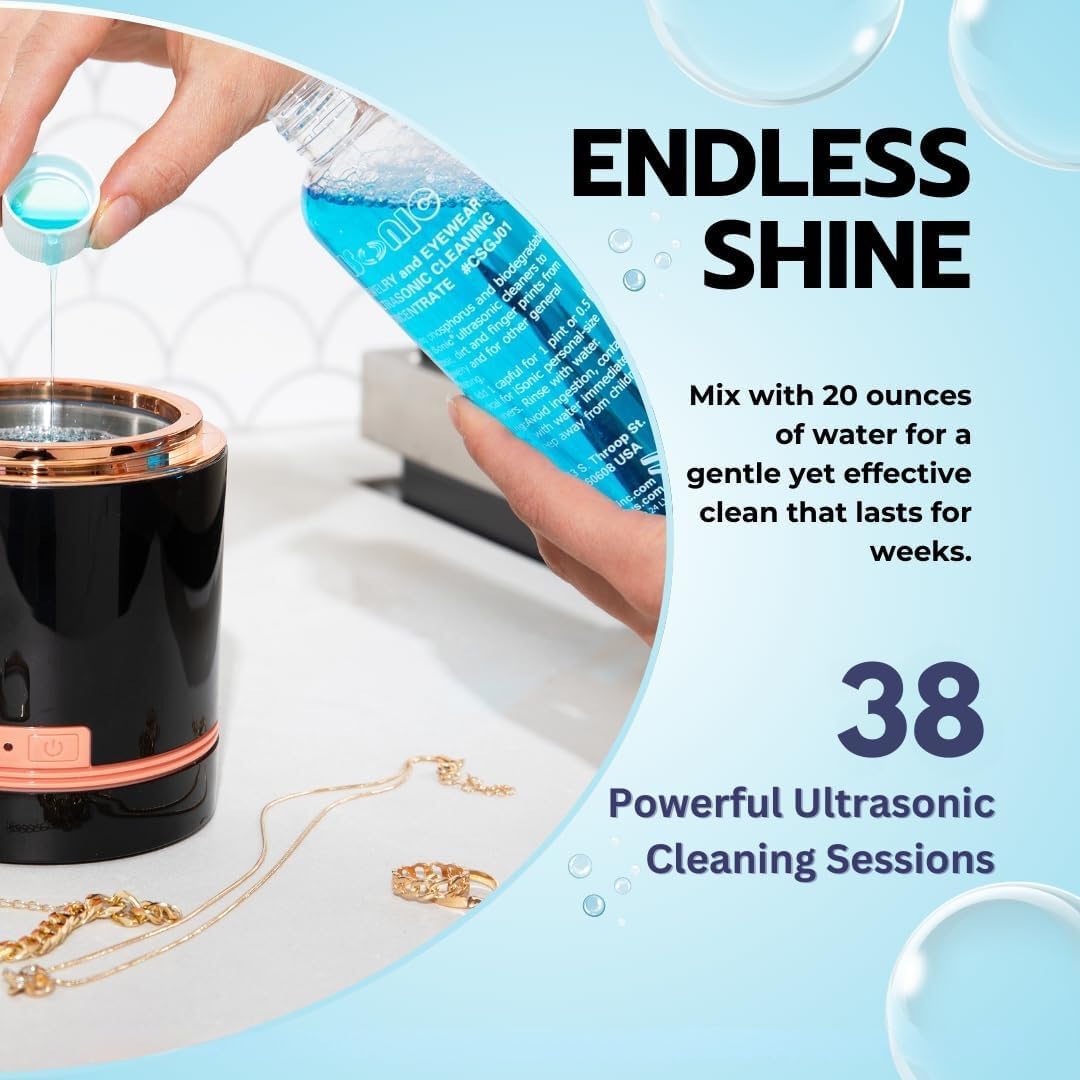
When jewelers and watchmakers talk about “ultrasonic cleaning,” they’re describing a process where a machine converts electricity into high-frequency sound waves — typically between 28,000 and 80,000 cycles per second — that generate millions of tiny pressure bubbles in a liquid bath. Those bubbles collapse violently against surfaces, scrubbing away grease, skin oils, and oxidation without any mechanical contact. The machine does the heavy lifting, but the cleaning solution you fill the tank with is equally responsible for the result. Use the wrong chemistry on the wrong material, and you can strip plating, cloud a soft gemstone, or pit a delicate alloy before you realize anything went wrong. This guide maps the four major solution families against the metals and stones you’re most likely to encounter, structured as a practical comparison so you can build a protocol that cleans effectively and doesn’t generate costly remakes.
The Four Solution Families: A Side-by-Side Overview
Before comparing specific use cases, it helps to understand what each formula type is actually doing. Every ultrasonic cleaning solution is a variation on one of four chemistry families. The comparison below addresses A6 by organizing each family as a named H3 subsection with a tier marker, so you can quickly match your workflow to the right category.
Alkaline Aqueous Concentrates — The Professional Workhorse
These are pH-adjusted, water-based concentrates diluted (typically 1:10 to 1:30 with deionized water) before use. They break down the fat-and-protein matrix in skin oils, cosmetics, and residual polishing compound more aggressively than any other formula type. The Elma tec clean A1 line and the Branson EC series for jewelry applications both fall here.
According to the Elma Ultrasonic elma tec clean A1 product data sheet, the A1 formulation operates at pH 9.0–10.5 and is rated compatible with most precious metals — including yellow gold, white gold, and platinum — at standard dilutions. Branson Ultrasonics’ cleaning solution application notes for jewelry recommend alkaline concentrate at a 1:15–1:20 dilution ratio and 50°C for gold jewelry service cleaning.
Where they shine: Solid 14k/18k gold, platinum, sterling silver (with specific caveats covered below), and hard gemstones including diamonds, rubies, sapphires, and cubic zirconia under heavy soil loads.
Where they don’t: Plated pieces, soft or porous stones (anything below Mohs 7), and filled or bonded metals where plating integrity is uncertain.
 product image](/images/external/83e9df4236ed.jpg)
GemOro
$21.95
In stock on Amazon
Check price on AmazonEnzyme-Based Formulas — The Gentle Mid-Tier Option
Enzyme cleaners use biological catalysts to break down organic soils at the molecular level. They operate at lower pH ranges — roughly neutral to mildly alkaline, approximately 7.0–8.5 — which makes them gentler on plating and organic gem materials. The trade-off is dwell time: enzyme action works best at 35–45°C and benefits from longer soak cycles (8–15 minutes versus 3–5 minutes for alkaline concentrates).
Where they shine: Gold-filled, vermeil, and lightly plated pieces where alkaline concentration risk feels high; also appropriate for bone, ivory, and resin-set pieces when stone type is uncertain. Watchmakers running cases and bracelets alongside jewelry often find enzyme-based cleaner a sensible everyday tank choice, stepping up to alkaline concentrate only for specific high-soil jewelry batches.
Where they don’t: Heavy oxide buildup or polishing compound removal — enzyme chemistry is not aggressive enough for that soil load.
 product image](/images/external/e73b580faa50.jpg)
Hagerty
$11.86
In stock on Amazon
Check price on AmazonNeutral pH Surfactant Solutions — The Low-Risk Default
These are dilute, non-ionic surfactant blends sitting at or very close to pH 7. They generate minimal chemical stress on any substrate, making them the lowest-risk option across the broadest range of materials. The cost is cleaning power: they remove light contamination well but struggle with heavy oil, corrosion, or polishing compound residue. Consumer-tier products such as Connoisseurs Jewelry Cleaner and many private-label “ultrasonic jewelry fluid” concentrates fall into this family.
Where they shine: Routine maintenance cleaning on finished jewelry that’s been worn but not serviced; soft stones; costume jewelry and fashion pieces with unknown plating specifications. The Jewelers Mutual Jewelry Care and Maintenance Resource Center consistently positions neutral, gentle cleaning agents as the appropriate choice whenever stone treatment history or plating specification is undocumented.
Where they don’t: Post-polishing bench work, service-state watchcases with dried lubricant, or any piece carrying significant oxidation load.
 product image](/images/external/1724505c5986.jpg)
Blitz
$8.95
In stock on Amazon
Check price on AmazonSpecialty Formulations — Silver Dips and What They’re Not For
Silver dip chemistry — typically thiourea-based or sodium thiosulfate-based — chemically reduces silver sulfide (tarnish) rather than physically removing it. It is fast and effective at its one job, but it is not an ultrasonic solution. Running silver dip in a heated ultrasonic tank accelerates chemical breakdown and can create byproducts harmful to equipment and workpieces. Jewelers of America’s Care & Cleaning Guides for Fine Jewelry describe silver dips as a bench-side rinse process, not a soak protocol — a distinction that matters operationally.
Ionic cleaners (the small consumer tabletop units that use electrolytic action) are a separate category entirely and are not relevant to professional ultrasonic workflows.
Blitz
$8.95
In stock on Amazon
Check price on AmazonMaterial-by-Material Decision Framework
The GIA Gem Care Reference Charts and Jewelers Mutual’s care resources both organize cleaning risk by material hardness and porosity — a useful scaffold for building your own protocol.
Solid Gold and Platinum
No practical solution restrictions at normal operating parameters (40 kHz, 40–60°C, 3–8 minute cycles). Alkaline aqueous concentrate at standard dilution, enzyme cleaners, and neutral surfactants are all compatible with solid 10k, 14k, 18k, 22k gold, and platinum. The risk at higher karatages isn’t chemical — it’s mechanical. Higher-karat gold (22k+) is softer and more susceptible to surface abrasion from cavitation intensity at very high frequencies (80 kHz), but solution chemistry is not the limiting factor.
Sterling Silver and Fine Silver
Sterling silver (92.5% silver / 7.5% copper) is where alkaline chemistry starts requiring attention. The copper fraction is more reactive than the silver fraction, and highly alkaline solutions above pH 10.5 can accelerate oxidation in poorly rinsed pieces or cause uneven surface chemistry in heavily alloyed silver. The practical answer, reflected in the Elma tec clean A1 product data sheet: keep alkaline concentrates at the lower end of their dilution range (1:20 or more dilute), confirm operating pH stays at or below 9.5, and rinse immediately and thoroughly with deionized water.
Fine silver (99.9%) is considerably more forgiving chemically but mechanically soft — cavitation intensity matters more than solution chemistry for fine silver pieces.
Plated and Filled Metals
This is the highest-risk category in professional jewelry cleaning, and where most mistakes happen.
The core problem: Plating is a thin layer. Rhodium plating on white gold is typically 0.1–0.5 microns; gold plating on fashion jewelry can be 0.2–1 micron or less. Alkaline chemistry at high concentrations, combined with cavitation energy and heat, can accelerate delamination and micro-pit the base metal through the plating layer. Crest Ultrasonics’ Concentration and Dilution Guides for Jewelry Applications flag alkaline solutions above pH 10 as not recommended for rhodium-plated pieces.
The protocol that mitigates this: Neutral pH surfactant or enzyme-based solution; 40 kHz (not 80 kHz); 35–40°C (not 55–60°C); cycle time under 3 minutes; direct examination before any repeat cycles.
Gold-filled pieces — which have a mechanically bonded gold layer rather than an electroplated one — are more durable and tolerate mild alkaline solutions better than electroplated pieces, but they are still not in the same tier as solid gold for solution tolerance.
If you cannot confirm the plating specification: Neutral pH surfactant only. The cleaning performance is lower, but so is the rework risk.
Diamonds, Rubies, Sapphires, and Cubic Zirconia
All four rate 8.5–10 on the Mohs scale, are non-porous, and have no significant organic content. Alkaline aqueous concentrate at standard dilution is appropriate. The risk vector for these stones is not chemistry — it is pre-existing inclusions or fracture-filling treatments. The GIA Gem Care Reference Charts note that fracture-filled diamonds treated with glass or resin to improve apparent clarity can have their fill material damaged or displaced by ultrasonic cavitation regardless of solution chemistry. When stone treatment history is unknown, neutral pH surfactant is the lower-risk default.
Soft and Organic Stones: The Non-Negotiable Exclusions
The GIA Gem Care Reference Charts are unambiguous here. The following materials should not go into an ultrasonic bath regardless of solution type or concentration:
- Emerald — heavily included; almost universally oil-treated
- Opal — porous; hydrophane varieties absorb water; high cavitation risk
- Pearl — organic; surface nacre is easily damaged
- Turquoise — porous; often stabilized with resin
- Coral, amber, jet — all organic materials
- Tanzanite — brittle cleavage planes
- Malachite, lapis lazuli — porous; dye absorption risk
For pieces set with any of these materials, the professional standard — cited consistently by Jewelers of America’s care guides and the Jewelers Mutual Jewelry Care and Maintenance Resource Center — is warm water with a soft brush or a gentle non-ultrasonic rinse, not an ultrasonic bath at any solution type.
Solution Parameters at a Glance
| Solution Type | Typical pH | Dilution Ratio | Max Temp (°C) | Plating Safe? | Hard Stones |
|---|---|---|---|---|---|
| Alkaline concentrate (e.g., Elma tec clean A1) | 9.0–10.5 | 1:10–1:30 | 60 | ⚠️ Caution | ✅ Yes |
| Enzyme-based | 7.0–8.5 | 1:20–1:50 | 45 | ✅ Yes | ✅ Yes |
| Neutral surfactant | 6.5–7.5 | 1:10–1:20 | 50 | ✅ Yes | ✅ Yes |
| Silver dip (thiourea-based) | 2.0–4.0 | Ready-to-use | Bench only | ❌ No | Bench only |
Building Your Protocol: If X, Then Y
You don’t need a different cleaner for every job — but you may need two or three formulas in rotation depending on your workflow mix.
If your primary work is solid gold and diamond jewelry, post-polishing: Alkaline concentrate at standard dilution is your baseline. It handles heavy soil loads efficiently and tolerates elevated temperatures that speed up cycle times. Elma tec clean A1 and Branson EC concentrate are the most-cited options at the professional tier per each manufacturer’s published application notes.
If you regularly process rhodium-plated white gold or fashion jewelry with unknown plating specs: Keep a separate tank or a ready-mixed batch of neutral pH surfactant for those pieces. Don’t run them through an alkaline bath to save time — the rework cost of a stripped rhodium job consistently exceeds the time saved on cycle speed.
If you work with silver heavily: Mildly alkaline or neutral-pH formula, immediate DI water rinse, and brief cycles. The chemistry isn’t the primary risk; it’s leaving alkaline solution in contact with the copper in the alloy longer than necessary.
If stone treatment history is unknown and you cannot consult the selling paperwork: Neutral pH surfactant or skip the ultrasonic entirely. The Jewelers Mutual Jewelry Care and Maintenance Resource Center consistently frames “when in doubt, hand clean” as the professional standard for undocumented pieces.
The Rinse Step You’re Probably Underestimating
Whichever chemistry you use, the post-bath rinse protocol matters nearly as much as the solution itself. Residual alkaline solution left to dry on sterling silver or plated surfaces contributes to surface bloom and micro-oxidation that leads to callbacks and remakes. The professional standard — reflected in the Elma tec clean application documentation and Branson Ultrasonics’ cleaning guides — is a two-stage rinse: first a running tap water rinse to remove bulk solution, then a deionized water rinse to remove mineral residue. If your DI supply is intermittent, distilled water functions as a substitute. Drying with compressed, filtered air (rather than a cloth, which redeposits lint) closes the protocol correctly.
Solution selection is one variable in the cleaning equation. Match it to the material, respect the chemistry parameters, and the steps that follow — rinse, dry, inspect — determine whether the result is genuinely professional.